Ingredients
Method
- INSTRUCTIONS
- Prep the Scallops:
- Remove scallops from packaging and check each one for a small rectangular side muscle. Peel it off with your fingers if present.
- Pat scallops completely dry with paper towels, pressing firmly on all sides. Don't just dab—really press to absorb moisture.
- Place scallops on a paper towel-lined plate and let rest at room temperature for 15 minutes. This allows surface moisture to evaporate and brings them to room temp for even cooking.
- Just before cooking, pat dry one final time. Season both sides with salt and pepper.
- Heat the Pan:
- Place a heavy-bottomed pan (cast iron or stainless steel) over medium-high to high heat. Let it preheat for 3-4 minutes without touching it.
- Test readiness by flicking a drop of water into the pan—it should sizzle and evaporate immediately.
- Add 2 tablespoons of oil and swirl to coat the pan. Wait 30 seconds until the oil shimmers.
- Sear the Scallops:
- Place scallops in the pan flat side down, spacing them at least 2 inches apart. You should hear a loud, immediate sizzle. If your pan won't fit all scallops with proper spacing, work in batches.
- DO NOT TOUCH the scallops for 2-3 minutes. Let them develop a golden crust undisturbed. You'll see the crust creeping up the sides—when it reaches about ⅓ of the way up, they're ready to flip.
- Flip each scallop using tongs or a thin spatula. They should release easily from the pan. If they stick, wait another 30 seconds.
- Cook the second side for 1-2 minutes only. The scallops should feel firm when gently pressed but still have slight give in the center. The inside should look slightly opaque or translucent—this is perfect.
- Remove scallops to a plate immediately. Don't leave them in the hot pan.
- Make the Garlic Butter Sauce:
- Reduce heat to medium-low. If there are any black burnt bits in the pan, wipe them out with a paper towel (keep the light brown bits—that's flavor).
- Add 2 tablespoons of butter to the pan. It will foam and sizzle. Swirl to distribute.
- Add minced garlic and stir constantly for 30-60 seconds. The garlic should become fragrant and soft but NOT browned. Burnt garlic will make the sauce bitter.
- Optional: Add ¼ cup white wine. It will bubble vigorously. Let it reduce by half, about 1-2 minutes, scraping up any browned bits from the pan.
- Add the remaining 2 tablespoons of butter, swirling to incorporate. The sauce will become glossy and cohesive.
- Squeeze in fresh lemon juice and stir in chopped parsley. Taste and adjust seasoning with salt and pepper if needed.
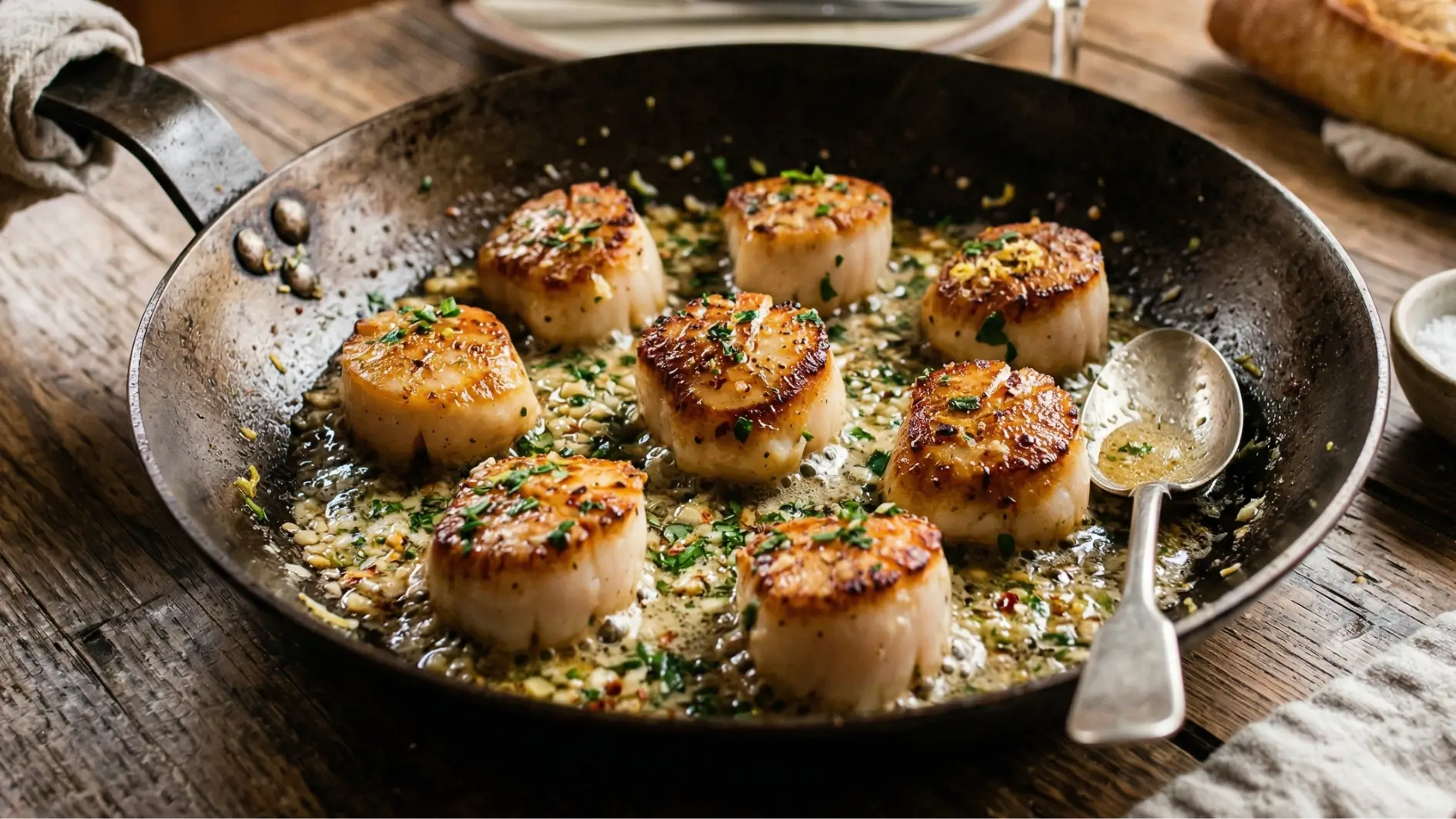
- Return scallops to the pan for 30 seconds only, spooning the garlic butter sauce over them to warm them back up.
- Serve immediately on warm plates with extra sauce spooned over the top.
Notes
Dry vs. Wet Scallops: Always buy DRY scallops (ask your fishmonger specifically). Wet scallops have been treated with sodium tripolyphosphate (STP) which makes them absorb water. This moisture prevents proper browning and creates a steamed, rubbery texture. Dry scallops are natural and will develop a beautiful golden crust.
Pan Choice: Use cast iron or stainless steel. Non-stick pans cannot achieve the high temperatures needed for proper searing.
Don't Skip the Drying: This is the most critical step. Every drop of moisture on the scallop's surface must evaporate before browning can begin. Pat dry obsessively—three times isn't too many.
Doneness: Pull scallops when they're 120-125°F internal temperature or when the center still looks slightly translucent. They will continue cooking from residual heat (carryover cooking). Better to slightly undercook than overcook—overcooked scallops turn rubbery in seconds.
Batch Cooking: If your pan only fits 6 scallops with proper spacing, cook in two batches. Crowding the pan drops the temperature and causes steaming instead of searing. Let the pan reheat for 1 minute between batches.
Storage: These are best served immediately. If you have leftovers, store in an airtight container in the fridge for up to 2 days. Reheat gently in a covered pan over low heat with a splash of water—never microwave.
Substitutions: No avocado oil? Use grapeseed or light olive oil. No fresh parsley? Use chives or skip. No wine? The sauce is delicious without it.