Table of Contents
Imagine it is 6:15 PM on a Tuesday. The workday was a marathon of meetings, your inbox is still humming, and the familiar, nagging question finally lands: “What’s for dinner?” You want something better than a soggy sandwich, yet the thought of a complex recipe involving twenty ingredients and three different pans feels like a personal affront. You crave a meal that tastes like a reward—a dish that feels like it belongs on a white tablecloth in a Tuscan bistro, but can actually be executed in your own kitchen while you’re still wearing your work clothes.
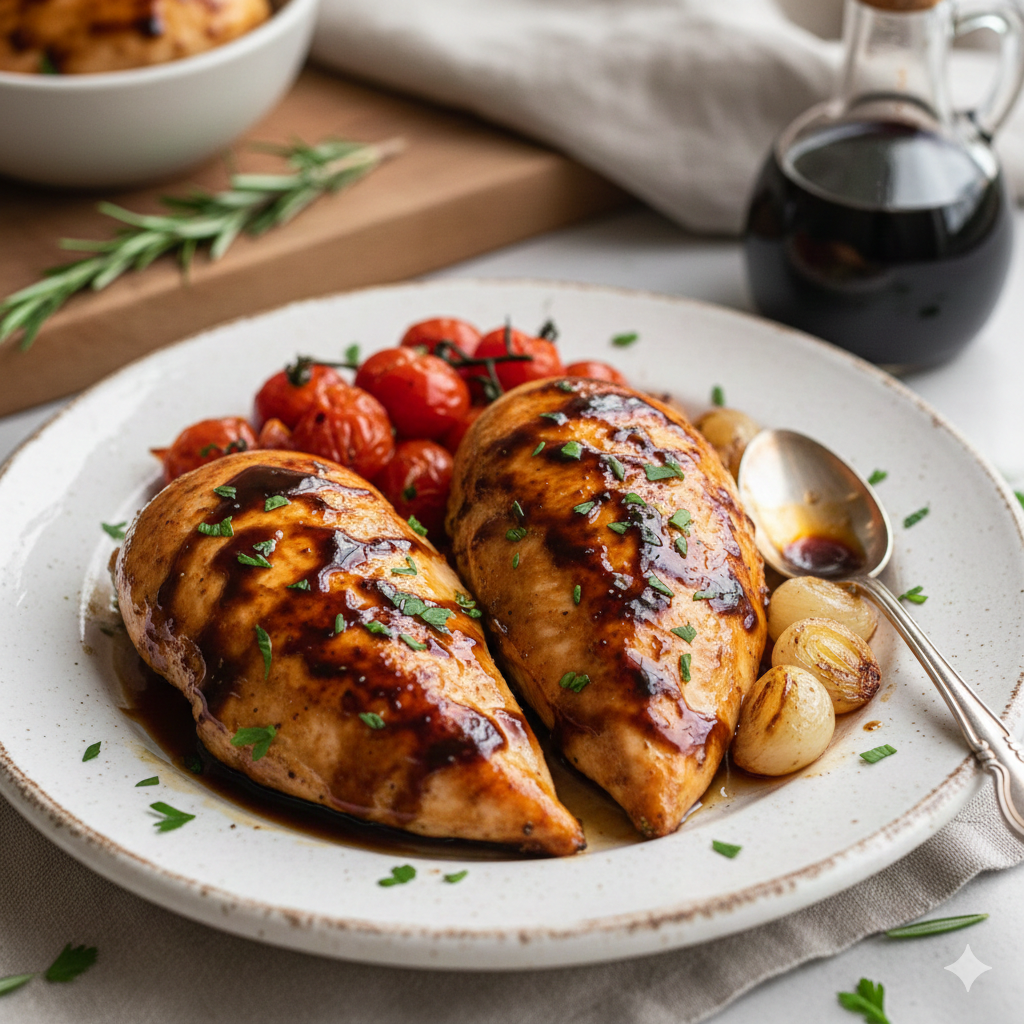
I’ve spent years perfecting the balance between “fast” and “refined,” and I can tell you that this Balsamic Glazed Chicken Recipe is the ultimate solution to the weeknight dilemma. It is the culinary equivalent of a little black dress: simple, timeless, and effortlessly sophisticated. With just a handful of pantry staples and one reliable skillet, you are about to transform humble poultry into a glossy, caramelized masterpiece that will make your family wonder if you secretly ordered catering.
Why This Balsamic Glazed Chicken Recipe is a Game Changer
In the world of home cooking, we often fall into the trap of thinking that flavor requires time. We assume that a deep, complex sauce needs hours of simmering. This recipe shatters that myth. It relies on the science of reduction—taking a few high-impact liquids and simmering them until their flavors concentrate into a thick, syrupy glaze that clings to every bite of chicken.
The “30-Minute Magic.”
You don’t need a wide-open evening to make this happen. From the moment you pull the chicken out of the fridge to the moment you’re garnishing the finished plates, you’re looking at roughly 25 to 30 minutes. This is faster than most delivery services and infinitely more satisfying. The cooking process is streamlined: while the chicken sears, you whisk the sauce. While the sauce reduces, you toss a salad. It is a rhythmic, efficient way to cook that doesn’t leave you feeling drained.
A Masterclass in Flavor Balance
What makes this specific Balsamic Glazed Chicken Recipe stand out is the harmony of flavors. High-quality balsamic vinegar brings a sharp acidity and a hidden fruitiness. When you pair that with honey or brown sugar, you create a “gastrique”—a classic French term for a syrupy, sweet-and-sour sauce. Add in the earthy punch of garlic and the aromatic lift of dried herbs, and you have a profile that hits every single taste bud. It is savory, sweet, tangy, and deeply umami all at once.
Choosing the Right Ingredients for Success
When a recipe has fewer than ten ingredients, each one has to pull its weight. You can’t hide lackluster ingredients behind a wall of spices. To get that restaurant-quality finish, you need to be intentional about what goes into your pan.
The Chicken: Quality and Prep
You have two main paths here: boneless, skinless chicken breasts or boneless, skinless chicken thighs.
- Chicken Breasts: These offer a lean, elegant look. However, they are prone to drying out if overcooked. To prevent this, I recommend using a meat mallet to pound them to an even thickness (about 3/4 of an inch). This ensures the thin “tail” of the breast doesn’t turn into leather while the thick center is still raw.
- Chicken Thighs: If you prefer a juicier, more forgiving piece of meat, thighs are your best friend. They contain more fat, which translates to more flavor and a silkier mouthfeel when paired with the balsamic glaze.
The Balsamic Vinegar: Don’t Settle
Walk down the vinegar aisle and you’ll see prices ranging from $4 to $40. For this recipe, you don’t need the “Liquid Gold” that has been aged for 25 years in wooden barrels (save that for drizzling over strawberries or parmesan chunks). However, you should avoid the bottom-shelf vinegar that tastes mostly like harsh acetic acid. Look for a “Balsamic Vinegar of Modena” with a slightly syrupy consistency and a hint of sweetness. If the ingredient list starts with “wine vinegar” and “grape must,” you’re on the right track.
The Master Ingredient List
Before you turn on the stove, clear your workspace and gather these essentials. Having your mise en place (everything in its place) is the secret to a stress-free kitchen.
| Ingredient | Quantity | Purpose |
| Chicken Breasts | 1.5 lbs (approx. 3-4) | The lean, high-protein canvas for our glaze. |
| Balsamic Vinegar | 1/2 Cup | The acidic backbone that provides deep color and tang. |
| Honey or Brown Sugar | 2 Tablespoons | Essential for caramelization and balancing the vinegar. |
| Garlic | 3 Cloves, minced | Provides a pungent, aromatic base that rounds out the sauce. |
| Italian Seasoning | 1 Teaspoon | A blend of oregano, thyme, and rosemary for herbal depth. |
| Olive Oil | 2 Tablespoons | Used for searing the chicken and building a flavorful crust. |
| Salt and Black Pepper | To taste | Never underestimate the power of basic seasoning. |
| Red Pepper Flakes | Pinch (optional) | For a subtle heat that cuts through the sweetness. |
Step-by-Step Instructions: From Pan to Plate
Success in the kitchen is about technique as much as it is about ingredients. Follow these steps to ensure your chicken is perfectly cooked and your glaze is thick and glossy, not burnt or watery.
1. Prepping and Searing for Maximum Flavor
Start by patting your chicken completely dry with paper towels. This is a step many home cooks skip, but it is vital. Moisture is the enemy of a good sear; if the chicken is wet, it will steam rather than brown. Once dry, season both sides generously with salt, pepper, and your Italian seasoning.
Heat your olive oil in a large skillet over medium-high heat. You’ll know it’s ready when the oil shimmers. Lay the chicken in the pan—away from you to avoid splatters—and leave it alone. Resisting the urge to move the chicken allows a golden-brown crust (the Maillard reaction) to form. Sear for about 5–6 minutes per side until golden and nearly cooked through. Remove the chicken to a plate and tent it loosely with foil.
2. Creating the Signature Glaze
Lower the heat to medium. In the same pan, you’ll see little brown bits stuck to the bottom. That is “fond,” and it is pure flavor. Add your minced garlic and red pepper flakes, sautéing for just 30 seconds until fragrant.
Now, pour in the balsamic vinegar and honey. Use a wooden spoon to scrape up those brown bits as the liquid bubbles. This process, called deglazing, incorporates all that concentrated chicken flavor back into the sauce. Let the mixture simmer and bubble. You are looking for it to reduce by about half. It will transform from a thin liquid into a dark, shimmering syrup that coats the back of your spoon.
3. The Final Glaze and Rest
Return the chicken and any accumulated juices back into the skillet. Spoon the glaze over the meat repeatedly. Let it simmer for another 2 minutes so the glaze tightens and adheres to the chicken like a shiny coat of lacquer.
Crucial Step: Move the chicken to a clean board or platter and let it rest for 5 minutes before slicing across the grain. This allows the fibers to reabsorb the juices, ensuring every bite is succulent.
Serving Suggestions for an Elegant Presentation
A great meal is also a visual experience. Since this Balsamic Glazed Chicken Recipe results in a stunning, dark mahogany finish, you want to pair it with side dishes that offer color and texture contrast.
- The Creamy Base: Place a sliced chicken breast over a mound of creamy parmesan polenta or garlic mashed potatoes. The richness of the starch soaks up the extra balsamic glaze beautifully.
- The Fresh Crunch: A bright arugula salad with shaved parmesan and a simple lemon vinaigrette provides a peppery, citrusy counterpoint to the sweet glaze.
- Roasted Vegetables: Toss some asparagus or Brussels sprouts in olive oil and roast them while you’re cooking the chicken. The charred edges of the veggies pair perfectly with the balsamic notes.
- The Finishing Touch: Don’t forget the garnish. A chiffonade of fresh basil or a handful of toasted pine nuts adds a pop of color and a professional touch that suggests you spent all afternoon in the kitchen.
Expert Tips for the Perfect Glaze
Even the simplest recipes have nuances. Here are a few “pro” secrets to ensure your result is flawless every time:
- Watch the Sugar: Because the glaze contains honey or sugar, it can go from “perfectly caramelized” to “burnt and bitter” very quickly once it starts to thicken. Keep your eyes on the pan during the final reduction.
- The Butter Trick: If you want a truly restaurant-style finish, whisk in one tablespoon of cold butter right at the end after you’ve turned off the heat. This is called monter au beurre; it adds a velvety sheen and a rounded richness to the sauce.
- Acid Adjustment: If your glaze feels too cloying or sweet, add a tiny squeeze of fresh lemon juice at the very end. The fresh acid will brighten the whole dish.
- Avoid Crowding: If your skillet isn’t large enough to fit all the chicken without the pieces touching, cook them in two batches. Crowding the pan drops the temperature and leads to gray, boiled-looking meat rather than a golden sear.
Frequently Asked Questions (FAQs)
What is the best chicken to use for a Balsamic Glazed Chicken Recipe?
For an elegant, clean presentation, boneless, skinless chicken breasts are the standard. However, if you are cooking for people who prefer more flavor and a juicier texture, chicken thighs are excellent. Thighs are also harder to overcook, making them a great choice if you’re multitasking in the kitchen.
Can I make this recipe dairy-free or gluten-free?
Yes! This recipe is naturally dairy-free as long as you use olive oil for searing. To ensure it is 100% gluten-free, verify that your balsamic vinegar does not contain “caramel color” or other additives that sometimes hide gluten. Most high-quality Balsamic Vinegar of Modena is naturally gluten-free.
How do I store and reheat leftovers?
You can store leftovers in an airtight container in the fridge for up to 3 days. When reheating, do so gently in a skillet over low heat with a tablespoon of water or chicken broth. This helps “loosen” the glaze back into a sauce so it doesn’t become a sticky paste in the microwave.
Can I add fruit to this recipe?
Absolutely. Balsamic vinegar pairs incredibly well with fruit. Many people enjoy adding halved cherry tomatoes or even fresh blueberries or peaches to the pan during the final reduction phase. The fruit breaks down slightly and adds a whole new dimension to the glaze.
Conclusion
Elevating your weeknight routine doesn’t require a miracle; it just requires a better strategy. This Balsamic Glazed Chicken Recipe proves that “quick” and “elegant” are not mutually exclusive. By mastering the simple art of the balsamic reduction, you gain a culinary skill that you can adapt for pork, salmon, or even roasted vegetables.
Tonight, skip the takeout and give yourself the gift of a home-cooked meal that actually feels like an event. You’ve earned a dinner that tastes this good.
Would you like me to create a customized grocery list for you based on this recipe, or perhaps suggest a specific wine pairing to complete your elegant weeknight meal?