Table of Contents
Picture this: You’re standing in your kitchen on a Wednesday evening, exhausted from work, staring at your empty countertop. Your stomach growls, your energy tanks are on empty, and the last thing you want is to spend an hour cooking. Yet somehow, you still crave something vibrant, nourishing, and impressive enough that you won’t feel like you’ve compromised on your wellness goals.
I’ve been there more times than I can count. That moment when takeout seems inevitable, but your body desperately needs real nutrients. That’s exactly when I stumbled upon this healthy roasted beet salad—and it changed everything about my weeknight dinners.
This isn’t your grandmother’s boring salad that leaves you hungry an hour later. This is a complete, satisfying meal that delivers restaurant-quality flavor in less time than it takes to stream two episodes of your favorite show. If you’ve convinced yourself that eating well requires sacrificing precious time, prepare to have that myth completely shattered.
Why This Healthy Roasted Beet Salad is a Game-Changer for Busy People
You’ve probably scrolled past dozens of roasted beet recipes, dismissing them because beets supposedly take forever to cook. Most traditional recipes instruct you to roast whole beets for 45 to 60 minutes, then peel them and prepare the rest. By the time dinner hits the table, you’ve invested nearly two hours.
Here’s what changes everything: cutting your beets into small cubes before roasting. This single technique slashes cooking time by more than half, transforming beets from a weekend project into a legitimate weeknight option.
Beyond the time factor, this healthy roasted beet salad addresses something even more important—the constant struggle between nutrition and convenience. Research from the USDA shows that Americans spend an average of just 37 minutes per day on food preparation. When you’re working within that constraint, every minute counts.
This recipe respects your time while delivering serious nutritional firepower. You’re getting a complete meal with healthy fats, fiber, plant-based protein, and a spectrum of vitamins and minerals that support everything from heart health to athletic performance.
The Incredible Health Benefits of This Roasted Beet Salad
Nutritional Powerhouse in Every Bite
Beets deserve their superfood status, and once you understand what they do for your body, you’ll want to eat them far more often. These ruby-red roots contain natural nitrates that your body converts into nitric oxide—a compound that relaxes blood vessels and improves blood flow. Translation? Better cardiovascular function and potentially lower blood pressure.
Studies published in nutrition journals have documented how dietary nitrates from beets can enhance athletic performance by improving oxygen delivery to muscles. Marathon runners and cyclists have caught onto this benefit, but you don’t need to be training for a race to appreciate better stamina during your daily activities.
The betalain pigments that give beets their distinctive color function as powerful antioxidants and anti-inflammatory agents. These compounds help your body combat oxidative stress and may support liver detoxification. When you combine beets with the healthy fats in this salad—from olive oil and walnuts—you maximize absorption of fat-soluble vitamins and phytonutrients.
Each serving of this healthy roasted beet salad delivers approximately 6 grams of dietary fiber, supporting digestive health and promoting that crucial feeling of fullness that prevents overeating later. The vitamin C content strengthens immune function, while folate supports cell growth and DNA synthesis.
Perfect for Every Dietary Lifestyle
One of the most frustrating parts of following a specific eating pattern is finding recipes that actually work with your requirements. This healthy roasted beet salad checks nearly every box:
- Naturally gluten-free without any substitutions needed
- Vegetarian as written, easily made vegan by swapping cheese for avocado
- Paleo-friendly when you choose compliant ingredients
- Whole30 approved if you skip the cheese and honey
- Low in calories but high in nutrient density
- Appropriate for diabetes management in reasonable portions
You won’t need to buy specialty ingredients or make complicated swaps. The recipe adapts to your needs without losing its essential character.
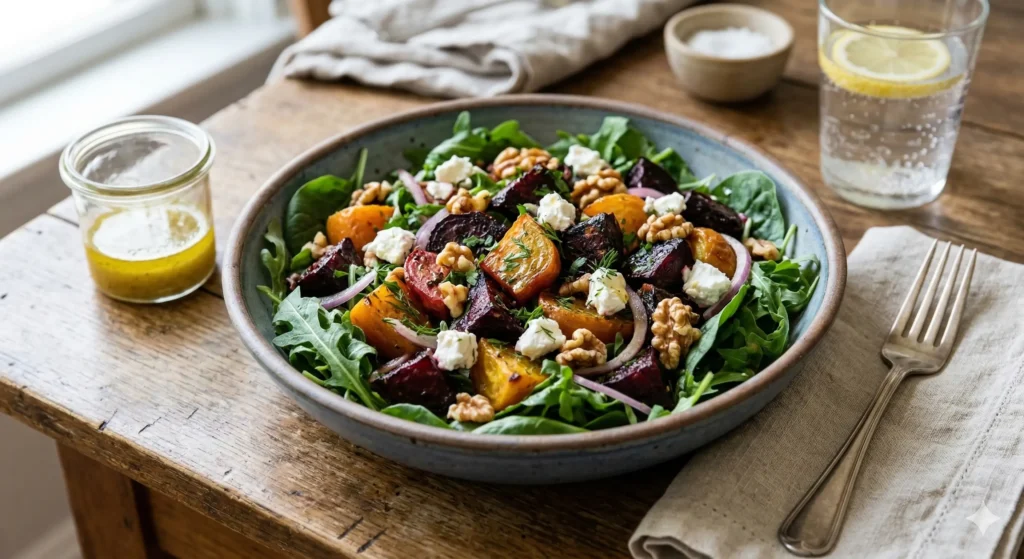
Essential Ingredients for the Perfect Healthy Roasted Beet Salad
What You’ll Need
Success starts with selecting the right ingredients. You don’t need exotic items from specialty stores—just fresh, quality basics that you can find at any grocery market.
| Ingredient | Quantity | Notes | Substitutions |
|---|---|---|---|
| Medium beets | 4-5 beets | Choose firm, smooth beets | Golden beets, candy cane beets |
| Extra virgin olive oil | 3 tbsp | Divided (2 tbsp + 1 tbsp) | Avocado oil |
| Mixed salad greens | 6 cups | Arugula, spinach, or spring mix | Massaged kale |
| Goat cheese | 4 oz | Crumbled | Feta, vegan cheese, or omit |
| Walnuts | ½ cup | Toasted | Pecans, pistachios, almonds |
| Balsamic vinegar | 2 tbsp | Quality matters here | Red wine vinegar |
| Honey | 1 tbsp | For dressing | Maple syrup (vegan option) |
| Dijon mustard | 1 tsp | Adds depth to dressing | Whole grain mustard |
| Salt & pepper | To taste | Sea salt preferred | — |
| Fresh herbs (optional) | ¼ cup | Parsley or dill | Basil, mint |
When shopping for beets, look for specimens that feel heavy for their size with smooth, unblemished skin. Smaller to medium beets tend to be sweeter and more tender than massive ones. If the greens are still attached and look fresh, that’s a bonus—you can sauté them separately for another meal.
Your olive oil doesn’t need to be a $40 bottle, but do invest in something you’d actually enjoy tasting. Since it features prominently in the dressing, quality makes a noticeable difference. The same principle applies to balsamic vinegar—avoid the cheapest option that tastes like harsh acidity with no complexity.
Step-by-Step: Making Your Healthy Roasted Beet Salad in Under 30 Minutes
The Secret Quick-Roasting Technique
Traditional beet recipes fail you before you even start by instructing you to roast whole beets. That approach guarantees you’ll be waiting 45 minutes minimum, often closer to an hour. Here’s how you reclaim that time:
1. Prep Your Beets (3 minutes)
Crank your oven to 425°F—that high heat is non-negotiable for achieving caramelization in our abbreviated timeline. While it preheats, scrub your beets thoroughly under cold running water to remove any dirt clinging to the skin.
Here’s the game-changer: you’re going to cut these beets into ½-inch cubes before they go anywhere near the oven. Skip the peeler entirely at this stage. The skin softens during roasting and either falls off or becomes barely noticeable when diced small.
Cutting beets into uniform cubes means every piece cooks at the same rate, and the increased surface area exposed to heat dramatically accelerates the roasting process. You’ve just transformed a 60-minute task into an 18-minute one.
2. Quick-Roast Method (18-20 minutes)
Toss your cubed beets with 2 tablespoons of olive oil, a generous pinch of salt, and several grinds of black pepper. The oil isn’t optional—it conducts heat efficiently and enables that gorgeous caramelization you’re after.
Spread the seasoned beets in a single layer across a foil-lined baking sheet. Overcrowding leads to steaming rather than roasting, so use two pans if necessary. Slide the pan into your preheated oven and set a timer for 18 minutes.
At the 9-minute mark, give everything a good stir to ensure even browning. Your beets are ready when they’re fork-tender with slightly crispy, caramelized edges. The natural sugars will have concentrated and intensified, delivering sweetness that balances the earthy flavor.
Pro tip: Why does cubing beat roasting whole? Mathematics. A whole beet might have a 3-inch diameter with minimal surface area exposed to heat. When you cut that same beet into ½-inch cubes, you’ve multiplied the exposed surface area by a factor of at least 15. More surface area equals faster cooking and better caramelization. That’s the secret behind our 30-minute promise.
3. While Beets Roast: Prep Everything Else (5 minutes)
Smart cooks maximize efficiency by multitasking during hands-off cooking time. While your beets transform in the oven, tackle these quick tasks:
Place your walnuts in a dry skillet over medium heat. Toast them for 3 to 4 minutes, stirring frequently, until they smell nutty and have darkened slightly. This step unlocks oils and intensifies flavor dramatically—never skip it.
Wash and thoroughly dry your salad greens. Wet greens prevent dressing from adhering properly, leaving you with a watery, disappointing salad. A salad spinner makes this effortless, but you can also pat leaves dry with clean kitchen towels.
Crumble your goat cheese if you purchased a log rather than pre-crumbled. Fresh crumbling gives you better texture and flavor since pre-crumbled varieties often contain anti-caking agents.
The Perfect Balsamic Dressing
Great salads live or die by their dressing, and this one delivers balanced acidity, subtle sweetness, and luxurious body without requiring any special equipment.
| Ingredient | Amount | Why It Matters |
|---|---|---|
| Balsamic vinegar | 2 tbsp | Tangy sweetness complements beets |
| Extra virgin olive oil | 1 tbsp | Healthy fats for nutrient absorption |
| Honey | 1 tbsp | Balances acidity |
| Dijon mustard | 1 tsp | Emulsifier + flavor depth |
| Salt & pepper | Pinch each | Enhances all flavors |
Add all ingredients to a small jar with a tight-fitting lid. Shake vigorously for 30 seconds until the mixture emulsifies into a cohesive dressing rather than separated layers. Taste and adjust—if it’s too acidic, add another half teaspoon of honey. Too sweet? A splash more vinegar balances things out.
The Dijon mustard serves double duty here. It adds a subtle sharpness that complements the sweet beets, and more importantly, it acts as an emulsifier that helps oil and vinegar stay combined rather than separating immediately.
Assembly in 2 Minutes
You’ve reached the home stretch. Grab your largest, prettiest serving bowl—presentation matters, even when you’re eating alone.
Start with your greens as the base layer. Add the roasted beets while they’re still warm if you enjoy the contrast of warm and cool elements, or let them cool to room temperature for a more traditional approach. Warm beets will slightly melt the goat cheese, creating delicious creamy pockets throughout the salad.
Drizzle your freshly shaken dressing over everything and toss gently with your hands or salad servers. You want every leaf lightly coated, not drowning in dressing. Start with three-quarters of the dressing and add more if needed—you can always add, but you can’t take away.
Scatter the toasted walnuts and crumbled goat cheese over the top. If you’re using fresh herbs, tear or roughly chop them and add them now. Serve immediately while textures are at their peak.
5 Creative Variations to Keep Your Healthy Roasted Beet Salad Exciting
Even the most delicious recipe gets boring if you eat it the same way week after week. These variations keep things interesting without requiring you to learn entirely new techniques.
Protein-Packed Power Bowl
Transform this side salad into a complete main course by adding substantial protein. Grilled chicken breast, sliced into strips, adds about 25 grams of protein per serving. Chickpeas offer a plant-based option with 15 grams of protein per cup, plus extra fiber. Hard-boiled eggs contribute 12 grams of protein along with beneficial choline.
This version works beautifully for meal prep. Pack the protein separately and add it to your salad just before eating to maintain optimal texture.
Mediterranean Twist
Swap the goat cheese for crumbled feta and add a handful of Kalamata olives and diced cucumber. Replace the balsamic dressing with a lemon-herb vinaigrette made from fresh lemon juice, olive oil, minced garlic, and chopped oregano.
This variation brings briny, bright flavors that feel refreshing on warm days. The cucumbers add hydrating crunch, while the olives contribute healthy fats and satisfying saltiness.
Fall Harvest Version
Roast cubed butternut squash alongside your beets for a seasonal twist that celebrates autumn produce. Substitute pecans for walnuts and add a handful of dried cranberries plus a thinly sliced Granny Smith apple. Replace the honey in your dressing with pure maple syrup and add a pinch of cinnamon.
This version feels festive enough for Thanksgiving dinner but easy enough for regular weeknight rotation. The combination of sweet squash, tart cranberries, and crisp apples creates complex flavor layers.
Vegan & Dairy-Free
Omit the goat cheese entirely or replace it with sliced avocado for creamy richness. Cashew cream makes an excellent dairy-free alternative—blend soaked cashews with water until smooth and drizzle over the salad. Nutritional yeast adds a savory, slightly cheesy flavor without any animal products.
Increase the quantity of walnuts to ¾ cup for additional healthy fats and satisfying texture. Use maple syrup instead of honey in the dressing to keep everything plant-based.
Asian-Inspired Fusion
Add mandarin orange segments and steamed edamame for an unexpected flavor combination. Replace the balsamic dressing with a sesame-ginger vinaigrette made from rice vinegar, toasted sesame oil, fresh grated ginger, and a touch of tamari. Top with toasted sesame seeds instead of walnuts and include shredded napa cabbage for extra crunch.
This variation demonstrates how versatile beets truly are—they adapt beautifully to completely different flavor profiles beyond the typical European approach.
Meal Prep & Storage: Make This Healthy Roasted Beet Salad Work for Your Week
Batch Cooking Strategy
Sunday meal prep transforms chaotic weeknights into calm, nourishing experiences. Instead of making this healthy roasted beet salad from scratch each time you want it, invest 30 minutes on Sunday to prepare components that last all week.
Double or triple your beet recipe. Roast multiple sheet pans simultaneously—your oven doesn’t care if it’s holding one pan or three. Once cooled, transfer the beets to an airtight container where they’ll maintain quality for five full days.
Toast a full cup of walnuts at once. Store them in a sealed container at room temperature for up to a week. Having them ready to go eliminates a step during assembly.
Mix a large batch of dressing in a mason jar. It keeps beautifully in the refrigerator for seven days. Just shake it vigorously before each use since natural separation will occur.
Component Storage Method
The secret to preventing soggy, unappetizing salad is keeping components separate until you’re ready to eat. Here’s your storage system:
Container 1: Roasted beets in an airtight container (refrigerated, 5-7 days) Container 2: Washed, thoroughly dried greens with a paper towel to absorb excess moisture (refrigerated, 3-4 days) Container 3: Toasted nuts (room temperature in sealed container, 7 days) Container 4: Dressing in a jar (refrigerated, 7 days) Container 5: Crumbled cheese (refrigerated in original packaging, check date)
When hunger strikes, assembly takes exactly two minutes. Grab your greens, add beets, toss with dressing, top with nuts and cheese. You’ve got a restaurant-quality meal faster than you could order delivery.
This method works brilliantly for packed lunches. Layer beets on the bottom of your container, add greens, pack dressing separately in a small container, and keep nuts and cheese in a separate compartment. When lunchtime arrives, dump everything together, shake, and enjoy.
Common Mistakes to Avoid When Making Roasted Beet Salad
Beet-Related Blunders
Cutting beets too large: This guarantees they won’t cook in our 30-minute timeframe. Your cubes need to be ½-inch or smaller. When in doubt, go smaller—they’ll cook faster and caramelize better.
Overcrowding the pan: Packing beets tightly together creates steam rather than the dry heat needed for roasting. They’ll cook, but they’ll be soft and bland instead of caramelized and intensely flavored. Use multiple pans if necessary and ensure a single layer with space between pieces.
Skipping the oil: Oil isn’t just for preventing sticking—it’s essential for heat transfer and caramelization. Under-oiled beets emerge dry and dull. Generous coating equals gorgeous results.
Inconsistent sizes: When some cubes are ¾-inch and others are ¼-inch, some pieces burn while others stay raw. Uniform sizing ensures even cooking.
Assembly Errors
Adding dressing too early ruins texture. Dressed greens start wilting immediately, so wait until right before serving to toss everything together.
Pre-crumbled cheese seems convenient, but it contains additives that prevent proper blending with the salad. Crumbling fresh cheese yourself takes 30 seconds and delivers superior results.
Skipping the toasting step for nuts is like leaving money on the table. Raw walnuts taste fine; toasted walnuts taste incredible. The transformation requires minimal effort for maximum flavor payoff.
Nutritional Breakdown: What Makes This Salad So Healthy
Understanding exactly what you’re putting into your body helps you make informed decisions about your nutrition. Here’s the complete picture for one generous serving of this healthy roasted beet salad:
| Nutrient | Amount | % Daily Value | Key Benefit |
|---|---|---|---|
| Calories | 285 | — | Satisfying yet light |
| Protein | 8g | 16% | Muscle support |
| Fiber | 6g | 24% | Digestive health |
| Vitamin C | 12mg | 20% | Immune function |
| Folate | 180mcg | 45% | Cell growth |
| Iron | 2.5mg | 14% | Energy production |
| Potassium | 520mg | 15% | Heart health |
| Healthy fats | 18g | — | Nutrient absorption |
At just 285 calories, this salad delivers substantial nutrition without breaking your daily calorie budget. The 6 grams of fiber contribute significantly toward the recommended 25-38 grams per day, supporting digestive regularity and promoting lasting satiety.
The folate content stands out—nearly half your daily requirement in a single serving. Folate plays crucial roles in DNA synthesis, cell division, and during pregnancy, proper fetal development.
Those 18 grams of healthy fats come primarily from olive oil and walnuts. These monounsaturated and polyunsaturated fats support cardiovascular health, reduce inflammation, and help your body absorb fat-soluble vitamins A, D, E, and K from the vegetables.
Perhaps most importantly, the potassium and dietary nitrates work together to support healthy blood pressure levels. Regular consumption of nitrate-rich vegetables like beets has been associated with modest but meaningful reductions in blood pressure readings.
Expert Tips for the Best Healthy Roasted Beet Salad Every Time
Chef’s Secrets
Choose the right beets. At the market, look for beets that feel heavy for their size with smooth, unblemished skin and no soft spots. Smaller to medium beets deliver sweeter flavor and more tender texture than massive specimens. If the greens are still attached and look fresh, that’s an excellent sign of overall quality—plus you can sauté those greens separately.
Temperature matters tremendously. High heat at 425°F enables the caramelization that makes this recipe special. Lower temperatures will cook the beets, but they’ll emerge steamed rather than roasted, missing that concentrated sweetness and crispy edges. Don’t skip the preheat step—putting beets into a cold oven extends cooking time and affects texture.
Use the toss test. Your beets are perfectly done when a fork pierces them easily but they’re not falling apart or mushy. They should maintain their shape with slightly crispy, caramelized edges. Remember that they’ll continue cooking slightly from residual heat after you remove them from the oven, so err on the side of slightly firm.
Consider temperature serving options. Warm beets make the goat cheese slightly melty, creating delicious creamy pockets throughout your salad. This is my preferred approach for immediate serving. Cold beets work beautifully for meal-prepped portions eaten later. Room temperature hits a sweet spot—beets that have cooled for 10-15 minutes after roasting deliver great flavor without being hot enough to wilt greens.
Master dressing application. Always dress your greens first before adding delicate toppings like cheese and nuts. This ensures even coating. Alternatively, serve dressing on the side for crispier greens that stay fresh longer—particularly useful for packed lunches or when you’re uncertain how much people want.
Frequently Asked Questions About Healthy Roasted Beet Salad
Can I make a healthy roasted beet salad ahead of time?
Absolutely, with the right approach. The key is storing components separately rather than assembling everything at once. Roast your beets up to five days in advance and store them in an airtight container in the refrigerator. Keep greens, dressing, nuts, and cheese in separate containers. This method actually simplifies weeknight dinners since assembly takes only two minutes when you’re ready to eat.
How do I prevent my healthy roasted beet salad from turning everything pink?
The dreaded pink problem has a simple solution: keep beets separate until the last possible moment. If you’re meal prepping, store roasted beets in their own container away from other ingredients. When serving, either toss beets with dressing first before adding to greens, or place them on top as a garnish rather than mixing them throughout. Using golden beets instead of red beets eliminates this issue entirely while still delivering the same nutritional benefits.
Can I use canned beets instead of fresh for this healthy roasted beet salad?
Technically, yes, though you’ll sacrifice significant flavor and texture. Canned beets have been pre-cooked and often turn mushy, lacking the caramelized edges and concentrated sweetness that roasting provides. The canning liquid also dilutes their natural flavor. If canned beets are your only option, drain them thoroughly, pat them completely dry, and warm them briefly in a 400°F oven with olive oil for 5-7 minutes to improve texture and flavor.
Is this healthy roasted beet salad good for weight loss?
This salad supports weight management goals beautifully. At approximately 285 calories per generous serving, it provides substantial nutrition without excessive calories. The 6 grams of fiber promote satiety by slowing digestion and keeping you fuller longer. Healthy fats from olive oil and walnuts trigger the release of hormones that signal fullness to your brain. The natural nitrates in beets may support exercise performance, indirectly helping with weight management by making workouts feel easier.
How long does it really take to make this healthy roasted beet salad?
Total time runs 25-30 minutes: three minutes for prep work, 18-20 minutes for roasting (during which you’re preparing other components), and two to four minutes for final assembly. The beauty lies in the hands-off nature—most of this time involves the oven doing the work while you multitask. It’s genuinely one of the fastest “roasted” recipes you’ll encounter.
What’s the best way to cut beets without staining my hands?
Wear disposable gloves or slip a plastic produce bag over your hand like a makeshift glove. Alternatively, rub a small amount of cooking oil onto your hands before handling beets—it creates a barrier that prevents stains from setting. If you do get beet stains, scrub your hands with lemon juice or make a paste from baking soda and water. The acidity or abrasiveness helps lift the pigment.
Can I freeze roasted beets for this healthy roasted beet salad later?
Roasted beets freeze exceptionally well for up to three months. Cool them completely after roasting, then freeze in a single layer on a baking sheet before transferring to freezer bags. This prevents them from clumping together. Thaw in the refrigerator overnight before using. Important note: freeze only the beets, never the assembled salad or greens, which don’t survive freezing.
How can I make this healthy roasted beet salad more filling?
Add protein to transform this from a side dish into a complete meal. Grilled chicken adds approximately 25 grams of protein, chickpeas contribute 15 grams, hard-boiled eggs provide 12 grams, and quinoa delivers 8 grams per cup. You can also increase the portion of nuts to ¾ cup or add sliced avocado for additional healthy fats that enhance satiety. These additions create a balanced meal with protein, complex carbs, healthy fats, and abundant vegetables.
Your New Go-To Healthy Roasted Beet Salad Recipe
You’ve just discovered something rare in the cooking world—a recipe that genuinely delivers on its promises. This quick and easy healthy roasted beet salad proves that nutritious eating doesn’t require sacrificing your limited time or settling for bland, boring food.
In under 30 minutes, you can create a restaurant-quality dish bursting with flavor, loaded with essential nutrients, and versatile enough to serve as a light lunch, elegant dinner side, or impressive contribution to any gathering. The quick-roasting technique eliminates the biggest barrier to cooking with beets, transforming them from a weekend project into a legitimate weeknight option.
The flexibility built into this recipe means you’ll never get bored. Whether you prefer Mediterranean flavors, Asian-inspired fusion, protein-packed power bowls, or simple classic preparations, the foundation remains the same. You’re learning a technique, not just memorizing a single recipe.
Your meal prep game just leveled up significantly. The component storage method means you can assemble fresh, vibrant salads in two minutes flat throughout your week. No more soggy, sad desk lunches or uninspired dinners thrown together in desperation.
Remember, sustainable healthy eating isn’t about perfection or complicated recipes that require specialty ingredients and hours of work. It’s about having reliable, delicious recipes like this healthy roasted beet salad in your regular rotation—recipes that work with your schedule, satisfy your taste buds, and genuinely nourish your body.
The next time you’re standing in your kitchen wondering what to make, remember this salad. It’s ready to save your dinner, impress your guests, fuel your workouts, and remind you that healthy eating can be both simple and absolutely delicious.
Ready to transform your relationship with vegetables? Grab those beets, preheat your oven to 425°F, and start creating. Your body will thank you, your taste buds will celebrate, and your future self will appreciate having one more foolproof recipe that actually works.
Pin this recipe for later, share it with friends who need easy, healthy meal ideas, and let me know how your version turns out—I’d love to hear about the variations you create and the occasions this salad saves for you.