Table of Contents
Crack Chicken Penne: The One-Pan Pasta Dinner That Saved My Weeknights (And Will Save Yours Too)
It happened on a Thursday night about two years ago.
I had thirty minutes before everyone started circling the kitchen like hungry sharks, a pound of chicken I hadn’t thought about until that moment, and the kind of mental exhaustion that makes even boiling water feel ambitious. I threw together what I had — chicken, penne, the cream cheese that was about to expire, a ranch packet buried in the back of the spice drawer, some bacon left over from Sunday — and just… winged it.
My husband went back for thirds. My daughter, who at the time was in her “I don’t eat anything touching anything else” phase, cleaned her bowl. My son asked if we could have it again tomorrow.
That was the night crack chicken penne became a permanent fixture in our house.
I’ve since made it probably a hundred times, tweaked the ratios, figured out what goes wrong when you rush it, and tested every variation I could think of. What follows is everything I know about this recipe — the real version, not the sanitized one-paragraph blog version buried under stock photos. If you’re here because you need a dinner that actually works on a weeknight, you’re in the right place.
So What Even Is Crack Chicken Penne?
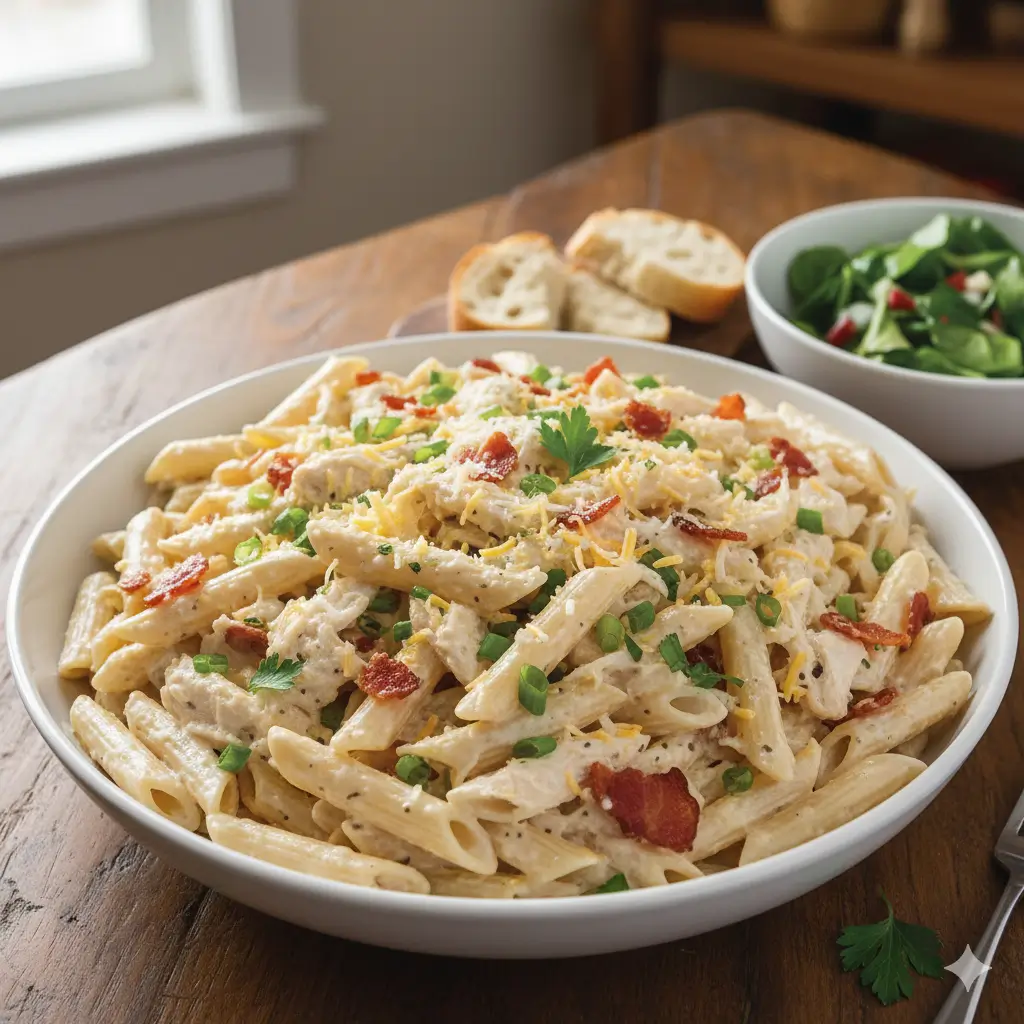
If you’ve never heard of it, here’s the short version: it’s a one-pot pasta built around what food bloggers started calling “crack chicken” — a combination of ranch seasoning, cream cheese, bacon, and cheddar that is, in the most literal sense of the word, impossible to stop eating.
The original crack chicken was a slow cooker thing. Dump some chicken in with cream cheese and ranch, shred it up, and eat it on sandwiches or crackers. Someone — and honestly, whoever you are, thank you — eventually decided to cook pasta directly in the broth alongside everything else, and the result was one of those rare dishes that genuinely needs no improvement.
It’s creamy without being heavy in a way that puts you to sleep. It’s savory without being one-note. The bacon gives it crunch. The cheddar gives it that pull everyone loves. The ranch seasoning does something quietly genius in the background that makes every bite taste more interesting than the last.
It’s also, and this part matters on a Tuesday night, done in about 35 minutes start to finish in a single pan.
Before You Start: Everything You Need
The Ingredients
Nothing exotic here. This is a genuine pantry-and-fridge recipe.
| Ingredient | Amount | Notes |
|---|---|---|
| Penne pasta | 12 oz | Rigatoni or rotini both work great too |
| Boneless chicken breasts | 1.5 lbs | Rotisserie chicken is an excellent shortcut |
| Cream cheese | 8 oz block | Full-fat — this is not the time for the light version |
| Ranch seasoning mix | 1 packet | Or make your own (recipe below) |
| Sharp cheddar, shredded | 1½ cups | Please shred it yourself — more on this later |
| Bacon | 6 strips | Cooked crispy and crumbled |
| Chicken broth | 2½ cups | Low-sodium if you’re salt-conscious |
| Heavy cream | ½ cup | Half-and-half works if that’s what you have |
| Garlic cloves | 3, minced | Fresh, not the jar stuff if you can help it |
| Butter | 2 tbsp | Unsalted |
| Salt and black pepper | To taste | Taste first before adding — ranch is already salty |
| Fresh parsley | Optional | For garnish — brightens the whole bowl visually |
A Note on the Cream Cheese
Take it out of the fridge 20 minutes before you start cooking. Cold cream cheese dropped into a hot pan is a lumpy disaster waiting to happen. Room temperature cream cheese melts in smoothly and evenly. This single step has saved more batches of this recipe than I can count.
A Note on the Cheddar
Buy a block and shred it yourself. Pre-shredded bagged cheese is coated in a starchy powder that prevents clumping in the bag — and also prevents smooth melting in your pan. Two extra minutes of grating makes a visible, textural difference in the finished sauce. It’s worth it.
What If You Don’t Have Ranch Seasoning?
Make your own with things you almost certainly already have:
- 1 tsp garlic powder
- 1 tsp onion powder
- 1 tsp dried dill
- ½ tsp dried parsley
- ½ tsp dried chives
- Salt and pepper to taste
Mix it and use the whole thing in place of the packet. Works perfectly.
How to Make It: The Actual Instructions
What You’ll Need Equipment-Wise
A large, deep skillet — 12 inches with high sides — or a Dutch oven. That’s really it. You want something with enough room for the pasta to move around when you stir it.
Timing Overview
| Stage | Time |
|---|---|
| Prep | 10 minutes |
| Cooking | 25 minutes |
| Total | 35 minutes |
| Servings | 4 to 6 people |
Let’s Cook
Start with the bacon. Lay your strips in the cold pan, then bring it up to medium heat. Starting cold renders the fat more evenly and gives you crispier bacon. Cook until done to your liking — I like mine pretty crispy for this dish because it holds up against the creamy sauce. Pull it out, set it on paper towels, let it cool, then crumble it up. Leave about a tablespoon of drippings in the pan. Don’t you dare pour those out.
Get the garlic going. Add the butter to those drippings and let it melt over medium heat. Toss in your minced garlic and stir it around for about 60 seconds. You’re looking for fragrant, not brown. The second it starts to color, move on.
Brown the chicken. Season your diced chicken with salt and pepper. Add it to the pan in a single layer — don’t pile it up or it’ll steam instead of sear. Cook for 6 to 8 minutes, turning once, until it’s got a bit of golden color on the outside and is cooked through. Pull it out and set it aside. It’ll finish warming through later when it goes back in.
Build your base. Pour the chicken broth into the hot pan and listen to it sizzle. Use your spoon to scrape up every brown bit stuck to the bottom — that’s concentrated flavor, and it’s going into your sauce whether it likes it or not. Stir in the ranch seasoning and let it dissolve.
Cook the pasta right in the broth. Pour your uncooked penne directly in. No separate pot, no pre-boiling, no extra dishes. Bring it to a boil, then drop it to a steady simmer, cover the pan, and let it cook for 10 to 12 minutes. Come back every few minutes to stir it and make sure nothing is sticking to the bottom. The pasta absorbs the broth as it cooks and gets seasoned from the inside out — which is one of the reasons this method produces such flavorful results.
Make the sauce. This is the step where everything becomes magic. Drop the heat to low. Add your room-temperature cream cheese in chunks — it’ll start melting almost immediately. Pour in the heavy cream. Stir slowly and consistently until the cream cheese is completely dissolved into the broth, and you’ve got a smooth, silky, creamy sauce coating every piece of pasta. If you rush this step or the heat is too high, the sauce will break. Low and slow. It takes maybe 3 minutes.
Finish the dish. Add your chicken back in and stir to coat. Pour in your shredded cheddar and keep stirring until it melts into the sauce. Taste it. Adjust for salt if it needs it (mine rarely does). Scatter the crumbled bacon over the top. Add parsley if you’re using it. Serve it straight from the pan.
Things That Can Go Wrong (And How to Avoid Them)
I’ve made every one of these mistakes personally, which is why I can tell you exactly what happens and how to fix it.
The sauce looks greasy and broken. This almost always means the cream cheese went in over too-high heat. Once it breaks, it’s hard to fully recover. Prevention is the only cure here — low heat, room temperature cream cheese, patient stirring.
The pasta is gummy or mushy. You either cooked it too long or didn’t use enough liquid. Pull it just before you think it’s done. It keeps cooking in the residual heat.
Everything tastes flat. You probably skipped scraping up the browned bits when you added the broth. Those stuck bits are where a lot of the flavor lives. Take 30 seconds to get them up next time.
The chicken is dry. You overcooked it in the initial sear, or you cut the pieces too small. Aim for roughly one-inch chunks and pull them at 165°F internal temperature. They’ll be in the sauce for a few more minutes anyway, so they don’t need to be fully cooked through at the sear stage.
It’s too salty. Ranch seasoning and bacon both bring a lot of sodium. If this happens, a small squeeze of lemon juice can help balance it. Going forward, use low-sodium broth and taste before adding any extra salt.
Five Ways to Change It Up
Once you know the base recipe, you can take it in a lot of different directions depending on what you have or what mood you’re in.
| Variation | What Changes | Good For |
|---|---|---|
| Slow Cooker | Chicken cooks low and slow; pasta added at the end | Busy days when you want dinner ready when you get home |
| Instant Pot | Everything pressure cooks together in about 5 minutes | Nights when 35 minutes feels like too long |
| Baked Casserole | Finished in the oven with a breadcrumb topping | When you want something that feels a little more special |
| Gluten-Free | Certified GF penne and a GF ranch packet | Households with gluten sensitivities |
| Spicy Version | Red pepper flakes or fresh jalapeño added with the garlic | Anyone who finds the original too mild |
Slow cooker method: Add raw chicken, broth, ranch seasoning, and cubed cream cheese to the slow cooker. Cook on LOW for 6 to 7 hours or HIGH for 3 to 4. Shred the chicken with two forks right in the pot, then stir in separately cooked penne, bacon, and cheddar. Give it 10 minutes to come together before serving.
Instant Pot method: Sauté bacon and garlic using the sauté function. Add chicken, uncooked penne, broth, and ranch seasoning. Seal the lid, pressure cook on HIGH for 5 minutes, quick release. Stir in cream cheese, heavy cream, and cheddar until smooth. Done.
What to Eat With It
Since crack chicken penne is rich and filling, I’d lean toward sides that are lighter and fresher to balance things out.
A simple green salad with a sharp vinaigrette is my go-to. Something acidic really does cut through the cream and makes the whole meal feel less heavy. Steamed broccoli or roasted asparagus works for the same reason and adds something green to the plate. If your family is the kind that needs bread with every pasta dinner — and there is zero shame in that — garlic bread is the obvious and correct choice.
Leftovers, Storage, and Meal Prep
This dish keeps and reheats really well, which makes it excellent for meal prep.
| Storage | Container | Duration |
|---|---|---|
| Fridge | Airtight container | 4 days |
| Freezer | Freezer-safe container | Up to 2 months |
Reheating on the stovetop is the best method by a wide margin. Add a splash of chicken broth or milk, heat over medium-low while stirring, and it comes back to its original creamy texture in a few minutes. The microwave works too — cover it with a damp paper towel and use medium power with 60-second intervals, stirring between each one.
If you’re freezing it, know that cream-based sauces can look a little weird when they thaw — slightly grainy or separated. Don’t panic. Add a tablespoon of fresh cream while you reheat it on the stovetop and stir continuously. It comes back together.
Meal prep tip: Cook a double batch on Sunday. Keep the pasta slightly underdone — it reheats better that way. Store the crumbled bacon separately so it stays crispy when you add it after reheating. That detail makes a bigger difference than you’d expect.
Nutritional Breakdown
Here’s an honest look at what’s in each serving, based on six servings per recipe:
| Nutrient | Per Serving |
|---|---|
| Calories | ~620 kcal |
| Protein | 38g |
| Total Fat | 32g |
| Saturated Fat | 16g |
| Carbohydrates | 48g |
| Fiber | 2g |
| Sugar | 3g |
| Sodium | 890mg |
| Cholesterol | 135mg |
This is not a light dish, and I don’t think it’s trying to be. That said, if you want to lean it out without gutting the flavor: use Neufchatel instead of cream cheese, swap heavy cream for evaporated skim milk, go with turkey bacon, cut the cheddar by a third, and throw in a couple of big handfuls of spinach at the end. It’s still genuinely good. Just lighter.
Questions People Ask Most Often
Why is it called “crack” chicken penne? It’s a tongue-in-cheek way of saying it’s addictive. No alarming ingredients — just ranch, cream cheese, bacon, and cheddar doing something so good together that people can’t stop eating it. The name stuck because it’s accurate.
Can I make it ahead? Yes, and it holds up really well. Make it fully, cool it down completely, and refrigerate for up to four days. Reheat with a splash of broth on the stovetop.
Can it be frozen? It can. Freeze in airtight containers for up to two months. Thaw overnight in the fridge and reheat on the stovetop with a bit of fresh cream to bring the sauce back together.
What other pasta shapes work? Rigatoni, rotini, cavatappi, shells, and farfalle all grip the sauce well. Avoid thin pastas like spaghetti — they get lost in a sauce this thick and creamy.
Is it gluten-free? Not as written, but it’s easy to adapt. Use certified GF penne and a GF ranch packet. Everything else is naturally gluten-free.
How do I make it spicy? Add half a teaspoon of red pepper flakes with the garlic at the start, or stir in a diced fresh jalapeño. Either way works great.
My sauce broke — what happened? Almost always a heat issue. Either the cream cheese was too cold, or the heat was too high when it went in, or both. Low heat and room-temperature cream cheese are the two things that prevent this every time.
One Last Thing
Here’s what I want you to take away from this: crack chicken penne is the kind of recipe that sounds almost too simple to be worth making, and then you make it and immediately understand why it has its own cult following.
It’s not fancy. It doesn’t require technique. It doesn’t need special equipment or a grocery list you have to plan for. It needs one pan, 35 minutes, and the willingness to let a few humble ingredients do something remarkable together.
Make it on a night when you’re tired. Make it when you need something reliable. Make it when you want to feed people who are hungry and happy and not particularly interested in anything complicated.
And then make it again, because you will absolutely be asked to.
Made this recipe? Tell us how it went in the comments — did you change anything? What did your family think? And if you’re looking for more dinners in this same spirit — fast, one-pan, real-food weeknight meals — check out what else we’ve been cooking.